
Path integration in normal aging and Alzheimer’s disease
Vladislava Segen, Johnson Ying, Erik Morgan, Mark Brandon, Thomas Wolbers
-
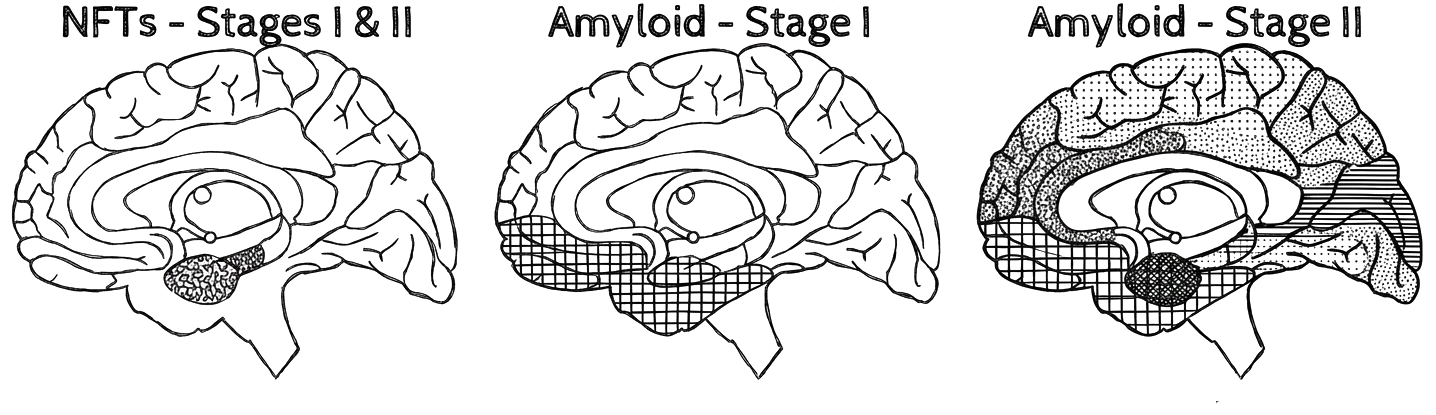
Path integration (PI) is an essential component of spatial navigation that is evolutionarily preserved across multiple species and has shared neural mechanisms in rodents and humans.
A review of past research highlights that PI impairments are prevalent in the aging population which consists of healthy older adults and older adults with Alzheimer's disease (AD). The observed PI impairments corroborate our current understanding of the neural underpinnings of PI and age- and AD-related pathology.
PI performance has the potential to be a sensitive cognitive marker in clinical research and practice for the detection of early AD as well as for the development of effective therapeutics.
In this review we discuss converging evidence from human and rodent research demonstrating how path integration (PI) is impaired in healthy aging and Alzheimer’s disease (AD), and point to the neural mechanisms that underlie these deficits. Importantly, we highlight that (i) the grid cell network in the entorhinal cortex is crucial for PI in both humans and rodents, (ii) PI deficits are present in healthy aging and are significantly more pronounced in patients with early-stage AD, (iii) compromised entorhinal grid cell computations in healthy older adults and in young adults at risk of AD are linked to PI deficits, and (iv) PI and grid cell deficits may serve as sensitive markers for pathological decline in early AD.
Sparsity of Population Activity in the Hippocampus Is Task-Invariant Across the Trisynaptic Circuit and Dorsoventral Axis
J Quinn Lee, Matt Nielsen, Rebecca McHugh, Erik Morgan, Nancy S Hong, Robert J Sutherland, Robert J McDonald
-
Evidence from neurophysiological and genetic studies demonstrates that activity sparsity-the proportion of neSparsity of Population Activity in the Hippocampus Is Task-Invariant Across the Trisynaptic Circuit and Dorsoventral Axisurons that are active at a given time in a population-systematically varies across the canonical trisynaptic circuit of the hippocampus. Recent work has also shown that sparsity varies across the hippocampal dorsoventral (long) axis, wherein activity is sparser in ventral than dorsal regions. While the hippocampus has a critical role in long-term memory (LTM), whether sparsity across the trisynaptic circuit and hippocampal long axis is task-dependent or invariant remains unknown. Importantly, representational sparsity has significant implications for neural computation and theoretical models of learning and memory within and beyond the hippocampus. Here we used functional molecular imaging to quantify sparsity in the rat hippocampus during performance of the Morris water task (MWT) and contextual fear discrimination (CFD) - two popular and distinct assays of LTM. We found that activity sparsity is highly reliable across memory tasks, wherein activity increases sequentially across the trisynaptic circuit (DG < CA3 < CA1) and decreases across the long axis (ventral<dorsal). These results have important implications for models of hippocampal function and suggest that activity sparsity is a preserved property in the hippocampal system across cognitive settings.

Behaviour-driven Arc expression is greater in dorsal than ventral CA1 regardless of task or sex differences
J. Quinn Lee, Rebecca McHugh, Erik Morgan, Robert J. Sutherland, Robert J. McDonald
-
Evidence from genetic, behavioural, anatomical, and physiological study suggests that the hippocampus functionally differs across its longitudinal (dorsoventral or septotemporal) axis. Although, how to best characterize functional and representational differences in the hippocampus across its long axis remains unclear. While some suggest that the hippocampus can be divided into dorsal and ventral subregions that support distinct cognitive functions, others posit that these regions vary in their granularity of representation, wherein spatial-temporal resolution decreases in the ventral (temporal) direction. Importantly, the cognitive and granular hypotheses also make distinct predictions on cellular recruitment dynamics under conditions when animals perform tasks with qualitatively different cognitive-behavioural demands. One interpretation of the cognitive function account implies that dorsal and ventral cellular recruitment differs depending on relevant behavioural demands, while the granularity account suggests similar recruitment dynamics regardless of the nature of the task performed. Here, we quantified cellular recruitment with the immediate early gene (IEG) Arc across the entire longitudinal CA1 axis in female and male rats performing spatial- and fear-guided memory tasks. Our results show that recruitment is greater in dorsal than ventral CA1 regardless of task or sex, and thus support a granular view of hippocampal function across the long axis. We further discuss how future experiments might determine the relative contributions of cognitive function and granularity of representation to neuronal activity dynamics in hippocampal circuits.
Place navigation in the Morris water task results in greater nuclear Arc mRNA expression in dorsal compared to ventral CA1
J Quinn Lee, Aubrey M Demchuk, Erik Morgan, Rebecca McHugh, Bruce L McNaughton, Robert J Sutherland, Robert J McDonald
-
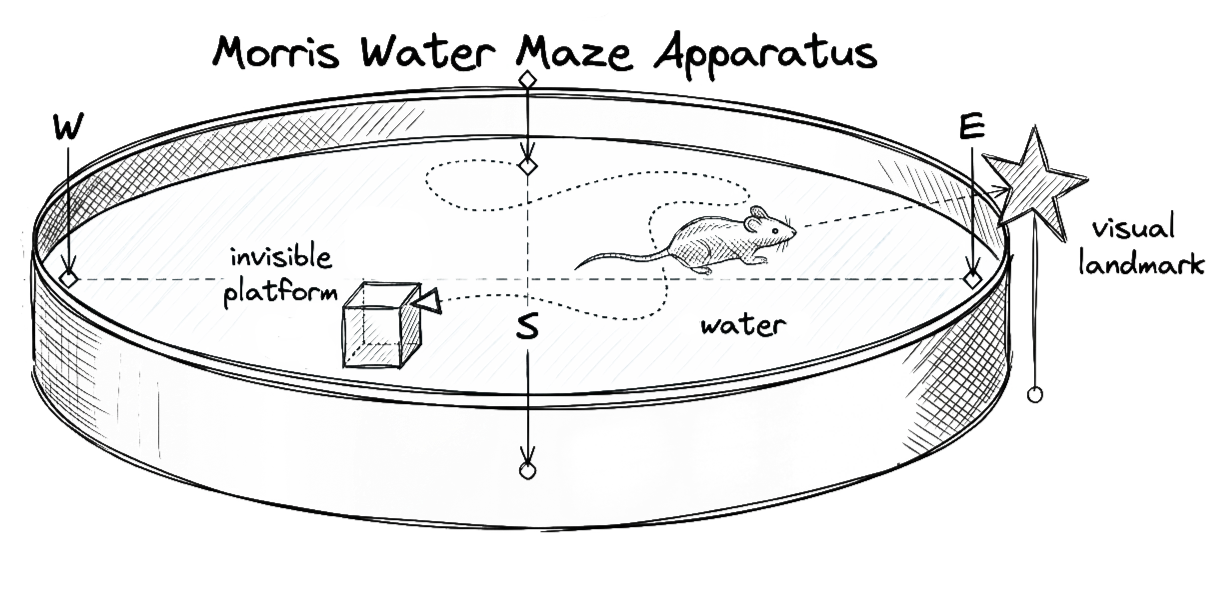
Previous work has shown that the dorsal hippocampus has greater activity than ventral regions during place navigation. Exposure to a novel context has also been found to increase hippocampal activation, possibly due to increased spatial demands. However, activation patterns in dorsal and ventral regions have not been investigated in the Morris water task (MWT), which remains the most popular assay of place memory in rodents. We measured activity in a large population of neurons across the CA1 dorsal-ventral axis by estimating nuclear Arc mRNA with stereologic systematic-random sampling procedures following changes to goal location or spatial context in the MWT in rats. Following changes to goal location or spatial context in the MWT, we did not find an effect on Arc mRNA expression in CA1. However, Arc expression was greater in the dorsal compared to the ventral aspect of CA1 during task performance. Several views might account for these observed differences in dorsal-ventral Arc mRNA expression, including task parameters or the granularity of representation that differs along the dorsal-ventral hippocampal axis. Future work should determine the effects of task differences and required memory precision in relation to dorsal-ventral hippocampal neuronal activity.